Leda Leaves Her Husband and Daughters for Three Years
The Lost DaughterLeda Leaves Her Husband and Daughters for Three Years marks a rupture that is both an escape from the exhausting demands of motherhood and a period of renewed intellectual and personal life. Recalled by Leda, the separation complicates any simple account of maternal devotion or abandonment: distance made her feel unexpectedly free, while the knowledge that her daughters were growing up without her remained a source of anxiety and regret.
Background: motherhood and divided demands
Leda’s departure followed years in which childcare competed with her work and sense of self. Bianca was born when Leda was twenty-three, while she and Gianni were struggling to establish themselves professionally; Leda did not secure the university position he did. She planned to have Marta soon afterward, accepting the expectation that Bianca needed a sibling. The account presents these decisions alongside Leda’s awareness that pregnancy and motherhood involved a profound division between her own life and the life growing within it.
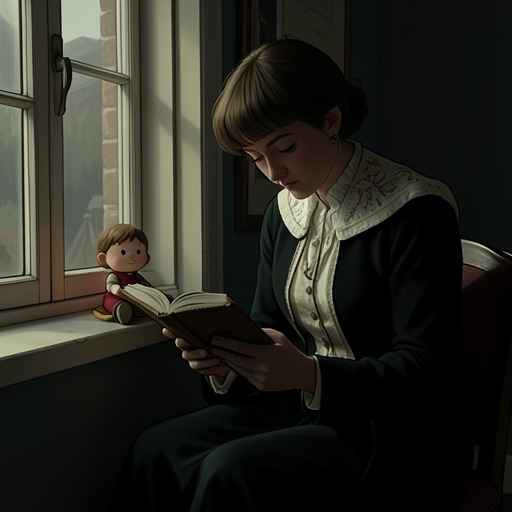
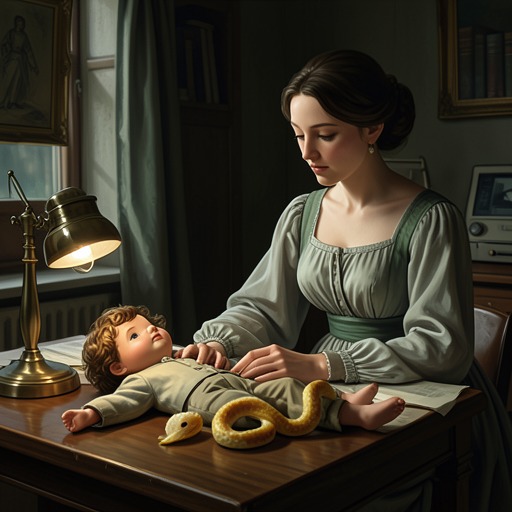
In the early years, Leda tried to be patient with Bianca, even joining the child’s games when she was exhausted and wanted to study. Marta’s crying in the next room could feel like a release: it gave Leda a reason to stop playing with Bianca, though she also felt that she was abandoning one daughter for the other. This conflict was not merely abstract. While trying to work on an essay, she once struck five-year-old Bianca after the child interrupted her, then sent her from the room. The episode shows the strain of a life in which the desire for research, recognition, and independent income had little protected time alongside care for two young children.
Distance and unexpected release
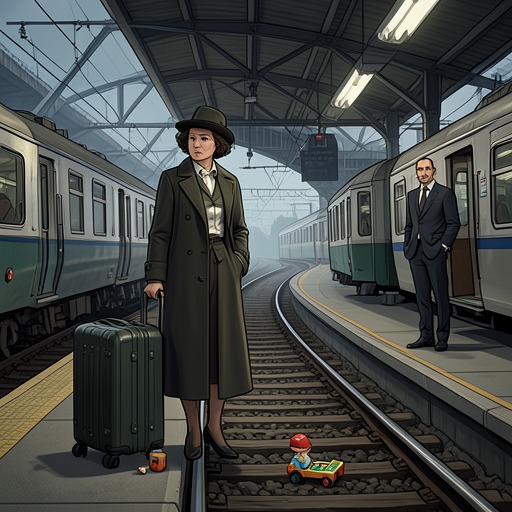
During the separation, Leda’s contact with Bianca and Marta was mostly through hurried telephone calls. Because she could not intervene directly in their daily lives, she came to experience their requests as less burdensome, almost like affectionate habits rather than continuing obligations. She describes feeling miraculously unfettered, as though a difficult job had finally been completed.
Her everyday life changed markedly. She corrected papers at night while listening to music, slept in the afternoon with earplugs, and ate once a day at a nearby trattoria. She became less irritable with students, and a colleague with whom she occasionally slept noticed that she seemed more generous and less distracted. Within a few months she had regained her youthful slenderness and felt a gentle strength returning; she was surprised to look, at forty-seven, as though years had fallen away. The change ties her physical and emotional renewal to the freedom of living without the daily schedules and needs of her daughters.
That release did not mean she had ceased to care about what happened to them. Leda feared that Gianni might take Bianca and Marta to Naples and leave them with Leda’s Mother and other relatives. She had asked him not to do so, but he insisted that her departure left him free to decide. He generally cared for the girls, yet when work or travel overwhelmed him, he did take them to the family apartment in Naples, sometimes leaving them there for months. Leda learned of this and regretted it, but remained away. She recalls having felt like another person, finally the real one, and allowing her daughters to encounter the family and city from which she herself had tried to escape.
Return and lasting consequences
When Leda eventually reclaimed Bianca and Marta and brought them to Florence, she accused her mother of having marked the girls as she had once marked Leda. She later recognized these accusations as unjust. Leda’s Mother had cared for the children and worn herself out doing so, but Leda had directed her own concealed anger at her. Her mother defended herself and was deeply upset; she died not long afterward. The separation thus altered more than Leda’s relationship with her daughters: its aftermath also sharpened and damaged the relationship with the woman who had cared for them in her absence.
The years away did not leave Leda without support. In retrospect, she recognizes that Hardy loved her and that she had a circle of friends who understood her intellectual ambitions and periods of depression. After she returned, some people withdrew and some doors closed, while Gianni later chose to leave for Canada. The return therefore did not restore the former family arrangement; it ended one separation while leaving its consequences distributed across several relationships.
Retrospective meaning
Leda’s later reflection on Nina’s desire to escape gives the remembered departure a second significance. She sees that Nina may have wanted not only access to a place to meet Gino, but also Leda’s help in confronting the future that seemed already laid out for her. Leda recognizes the difference between their circumstances: her own departure had been supported by Hardy and by a circle that shared her culture, while Nina had far fewer protections and faced greater risks. The comparison makes Leda’s earlier freedom neither a universal model nor a simple triumph. Her three years away were a real release, but they were enabled by particular relationships and accompanied by consequences she could not undo.